
Caribbean food culture is celebrated globally for its bold, spiced, slow-cooked savory dishes. The desserts deserve equal attention and rarely get it.
The desserts from the Caribbean are as layered and regionally specific as anything coming out of a jerk pit or a curry pot. It draws from African, British, French, Spanish, Dutch, Indian, and indigenous culinary traditions that collided across centuries of island history and produced something entirely its own. Caribbean desserts are not a single tradition. They are dozens of distinct island traditions that share certain ingredients, certain techniques, and a certain philosophy about sweetness that tends toward the rich, the coconut-forward, the spiced, and the deeply satisfying.
This guide covers the most beloved Caribbean desserts across the islands, with specific attention to the regional variations that make this category so much more interesting than a single dessert list can fully capture, practical notes on Caribbean dessert recipes you can make at home, and a close look at the sweet tradition of Trinidad, one of the Caribbean’s most culinarily distinct islands.
What Makes Caribbean Desserts Distinctive
Before walking through the list, it is worth understanding what gives Caribbean desserts their specific character, because the ingredients and techniques that define this category are different enough from European and North American dessert traditions to explain why the results taste the way they do.
Coconut is the dominant flavor across the region. More than any single ingredient, coconut defines the flavor profile of Caribbean sweets. Coconut milk, coconut cream, fresh grated coconut, dried coconut, and coconut oil all appear across the dessert traditions of virtually every Caribbean island. The coconut-forward quality of Caribbean desserts is not a trend. It is a structural feature of cooking in a region where coconut palms are one of the most abundant and historically significant food sources.
Rum is both an ingredient and a cultural symbol. The Caribbean produces some of the world’s most significant rum traditions, and rum appears in Caribbean dessert recipes not just as a flavoring but as a preservative, a soaking liquid, and a finishing element that ties the region’s agricultural history to its cooking. Rum cake, rum-soaked fruit cake, and rum-glazed desserts are found across the islands in forms that range from casual to celebratory.
Spices from the islands’ agricultural heritage appear throughout. Nutmeg, cinnamon, allspice, ginger, and vanilla are not accent flavors in Caribbean desserts. They are foundational. Grenada produces a significant portion of the world’s nutmeg supply. Jamaican allspice, also called pimento, is native to Jamaica and the broader Caribbean. These spices appear in Caribbean sweets at concentrations that reflect their regional abundance rather than the restrained hand of a tradition where they are imported luxuries.
Sweetness tends toward the deep and caramelized. Brown sugar, Demerara sugar, molasses, and cane syrup are the sweeteners that define Caribbean dessert flavor. The caramelized quality that comes from these less-refined sugars gives Caribbean sweets a depth that granulated white sugar does not produce.
The Most Beloved Caribbean Desserts
Rum Cake
Rum cake is the dessert most closely associated with Caribbean food culture in the broader global imagination, and for good reason. It is found across virtually every Caribbean island in some form, appears at every significant celebration from Christmas to weddings to birthdays, and has become one of the most recognized Caribbean exports in its packaged commercial form.
The foundational rum cake is a dense, moist cake soaked in rum after baking, often made with a base that includes butter, eggs, sugar, flour, and a significant quantity of rum both in the batter and as a finishing soak. The rum does not produce a strongly alcoholic flavor in the finished cake. It produces a depth of flavor, a particular moistness, and a preservation quality that allows a well-made rum cake to hold for weeks at room temperature.
Regional variations are significant. Jamaican rum cake, often called black cake at Christmas, is made with dried fruits that have been soaked in rum for weeks or months before baking, producing a deeply dark, intensely flavored result that is more similar to a British Christmas cake than to the lighter rum cakes found in other parts of the Caribbean. Trinidadian black cake follows a similar tradition. Bahamian rum cake tends to be lighter and more vanilla-forward. Cayman Islands rum cake, commercially the most widely exported version, is buttery and walnut-studded.
Coconut Drops
Coconut drops are one of the most straightforward and beloved Caribbean desserts from Jamaica and represent the kind of simple, ingredient-forward sweet that defines home cooking across the Caribbean.
The recipe is essentially grated fresh coconut cooked with brown sugar, ginger, and spices until it reaches a thick, sticky consistency, then dropped onto a greased surface to set into irregular rounds. The result is chewy, intensely coconut-flavored, and spiced with a warmth from the ginger that keeps the sweetness from being one-dimensional.
Coconut drops are sold by street vendors across Jamaica, made at home for family gatherings, and given as gifts during holidays. They require almost no equipment, no oven, and only a handful of ingredients, which made them historically accessible to home cooks across economic circumstances. That simplicity is part of their cultural staying power.
Bajan Coconut Bread
Barbados, known as Bajan in the local vernacular, has a coconut bread tradition that sits somewhere between a dessert and a sweet bread but belongs on any Caribbean desserts list because of how it is used culturally.
Bajan coconut bread is a dense, slightly sweet loaf made with grated coconut, flour, butter, sugar, and warming spices including cinnamon and vanilla. It is eaten as a snack, served with tea or coffee, and appears at celebrations as a gift item. The texture is more dense and moist than a standard bread loaf and more substantial than a cake, landing in the category of enriched sweet breads that appears across multiple Caribbean islands in various forms.
Pone
Pone is a dense, baked pudding-style dessert found across several Caribbean islands, with variations in Barbados, Trinidad, Guyana, and other parts of the Caribbean that use different primary starches depending on regional availability.
Cassava pone is the most widely known version, made from grated cassava mixed with coconut, sugar, spices, and butter and baked until firm and dense with a slightly caramelized exterior. Pumpkin pone uses a similar technique with pumpkin or squash as the primary ingredient. Cornmeal pone uses cornmeal as the base.
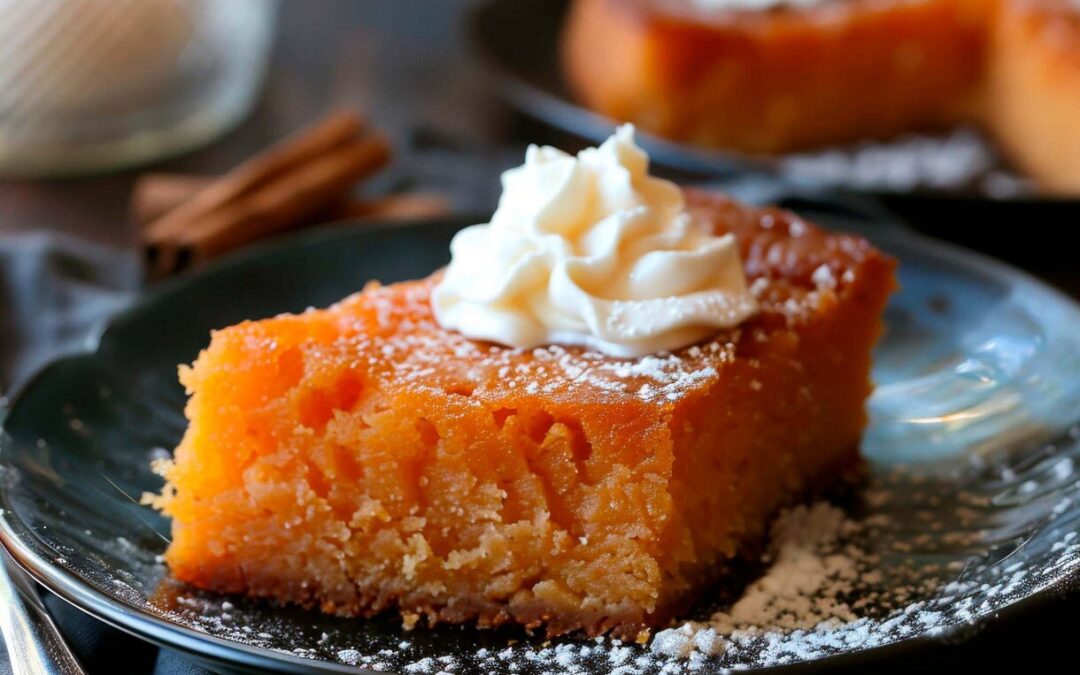
The result across all versions is a firm, dense, spiced sweet that is cut into squares and eaten at room temperature. Pone is not a light dessert. It is a filling, substantive sweet that reflects the agricultural staples of the islands where it developed.
Jamaican Gizzada
Gizzada, sometimes spelled gissada, is a small tart found throughout Jamaica consisting of a crisp, pinched pastry shell filled with a coconut and spice mixture that is cooked until sticky and deeply flavored.
The pastry shell is made from a simple shortcrust dough pinched up along the edges into a distinctive fluted rim that is one of the most recognizable visual markers of Jamaican baking. The filling is shredded coconut cooked with brown sugar, ginger, nutmeg, and sometimes a touch of vanilla until it becomes thick, sticky, and intensely flavored.
Gizzada is sold in Jamaican bakeries, patty shops, and roadside food stalls across the island. It appears in bakeries in diaspora communities across the United States, United Kingdom, and Canada wherever Jamaican food culture has taken root. It is one of the most distinctly Jamaican items on any Caribbean food desserts list.
Ducana
Ducana is an Antiguan specialty that represents the tradition of sweet dumplings and steamed sweets found across the Caribbean.
It is made from grated sweet potato and coconut mixed with sugar, spices, and flour, wrapped in banana leaves, and boiled until firm and cohesive. The banana leaf wrapper imparts a subtle grassy, aromatic quality to the dumpling that contributes to its flavor beyond what the ingredients alone would produce.
Ducana is traditionally served alongside salt fish in Antiguan cuisine, which places it at an interesting intersection of sweet and savory that is characteristic of Caribbean food culture more broadly. It is considered Antigua’s national dish when paired with salt fish, which gives this sweet dumpling a cultural significance beyond the dessert category.
Tamarind Balls
Tamarind balls are one of the most beloved street sweets across the Caribbean, found in Jamaica, Trinidad, Barbados, Guyana, and throughout the region in variations that share a common technique and ingredient.
Tamarind pulp, extracted from the tamarind pod and stripped of its seeds, is rolled into balls and coated in a mixture of sugar, salt, and often hot pepper. The result is an intensely tart, sweet, salty, and sometimes spicy small sweet that delivers a full range of flavors in a single bite.
The hot pepper addition in some regional versions reflects the Caribbean culinary philosophy of combining heat with sweet in ways that European and North American dessert traditions rarely explore. Tamarind balls in Trinidad and Jamaica are frequently made with a noticeable pepper kick that transforms the sweet from a one-note experience into something considerably more complex.
Tamarind balls are made at home, sold in small bags at roadside stalls, and found at Caribbean grocery stores in the candy and snack section. They require no baking and minimal equipment, which has contributed to their persistence as a homemade sweet across generations.
Sorrel Drink and Sorrel Jelly
Sorrel, made from dried hibiscus flowers, is one of the most iconic Caribbean Christmas beverages, consumed across the region in large quantities during the holiday season. Its inclusion in a Caribbean desserts discussion is warranted because the sweet, spiced, deeply red liquid bridges the category between drink and dessert in ways that Caribbean food culture frequently does.
Sorrel drink is made by steeping dried hibiscus petals with ginger, cinnamon, cloves, and sometimes orange peel, sweetening to taste, and adding rum in the traditional adult version. The flavor is tart, floral, deeply spiced, and intensely red in color. It is served chilled and is as culturally significant to Caribbean Christmas as eggnog is to the American holiday season.
Sorrel jelly and sorrel-flavored sweets extend the flavor into solid form, using the same hibiscus base in set dessert applications. Sorrel cake, sorrel ice cream, and sorrel-glazed desserts appear during the holiday season across the islands as extensions of the signature flavor into other formats.
Bread Pudding
Bread pudding appears across the Caribbean in forms that reflect both the British colonial influence on island baking and the regional ingredient additions that transformed a simple utilitarian dessert into something distinctly Caribbean.
Caribbean bread pudding is typically richer and more heavily spiced than its British or American counterparts, incorporating coconut milk in place of or alongside dairy milk, adding rum to both the custard and as a finishing sauce, and incorporating warming spices at concentrations that shift the flavor profile significantly. Raisins soaked in rum rather than plain dried fruit, a brown sugar and butter sauce finished with rum poured over the warm pudding, and a coconut milk custard base are all standard features of a well-made Caribbean bread pudding.
Caribbean Trinidad Desserts: A Closer Look
Trinidad and Tobago has one of the most distinct and culinarily complex food cultures in the Caribbean, reflecting its unusual demographic mix of African, Indian, Chinese, Spanish, French, and British influences that came together over centuries of colonial and immigration history.
The dessert tradition that emerged from this convergence is correspondingly diverse.
Kurma
Kurma is a Trinidadian sweet of Indian origin that arrived with indentured laborers from the Indian subcontinent in the nineteenth century and became thoroughly integrated into Trinidadian food culture over the following generations.
It is made from a stiff dough of flour, butter, and sugar that is cut or formed into small sticks or irregular pieces and deep fried until golden, then coated in a sugar syrup flavored with cardamom, ginger, and sometimes saffron. The result is crunchy, sweet, warmly spiced, and snackable in the way that most fried sweet doughs tend to be.
Kurma is sold at roadside stalls, made at home for religious festivals and celebrations, and found at Trinidadian bakeries. It represents one of the clearest examples of how Indian culinary tradition transformed within the Caribbean context, retaining its fundamental technique while absorbing local flavoring influences.
Toolum
Toolum is a Trinidadian candy made from molasses and grated coconut cooked together until thick and set, then shaped into small balls or squares.
The molasses gives toolum a dark, intensely caramelized flavor that is significantly more complex than a simple sugar-based candy. The coconut provides texture and a tropical sweetness that balances the deep bitterness of the molasses. The result is a candy that reads as adult in its complexity while remaining approachable to anyone who enjoys coconut and caramel-adjacent flavors.
Toolum is one of the older sweets in the Trinidadian canon, historically made with the molasses byproduct of sugar production that was one of Trinidad’s primary industries. Its flavor reflects that agricultural heritage in a direct way.
Sugar Cake
Sugar cake, found across the Caribbean but particularly beloved in Trinidad, is made from grated coconut cooked with sugar until the mixture reaches a specific consistency, then colored and shaped into small mounds that set as they cool.
The Trinidadian version is frequently colored pink and white within the same batch, producing a visually distinctive sweet that is as recognizable by appearance as by flavor. The texture when done correctly is slightly grainy from the crystallized sugar surrounding the coconut strands, with a firm exterior that gives way to a chewier center.
Sugar cake is sold at Trinidadian school canteens, market stalls, and sweet shops. It is one of the sweets most associated with childhood food memories for Trinidadians of multiple generations, which gives it a cultural weight beyond its simple ingredient list.
Pine Tart
Pine tart is a Trinidadian and broader Caribbean pastry filled with spiced pineapple jam and formed into a triangular shape that is immediately recognizable at any Caribbean bakery.
The pastry shell is a short, buttery dough that bakes to a golden, slightly flaky result. The filling is made from pineapple cooked down with sugar and spices including cinnamon and sometimes cloves until it reaches a thick, jammy consistency. The triangular shape is the standard form in Trinidad, though round versions exist in other parts of the Caribbean.
Pine tart is one of the most ubiquitous Caribbean dessert items available at Caribbean bakeries in diaspora communities across North America and the United Kingdom, alongside rock cakes, coconut bake, and other baked goods from the islands.
Black Cake
Trinidadian black cake is one of the most significant desserts in the Caribbean dessert canon and deserves extended discussion beyond its brief mention in the rum cake section.
Trinidadian black cake is a dense, dark, intensely flavored fruit cake made with dried fruits that have been soaked in rum and cherry brandy for a period ranging from weeks to years. The fruit soaking is treated as a serious kitchen practice in many Trinidadian households, with some families maintaining continuously replenished containers of soaking fruit that are drawn from for each year’s Christmas cake and replenished after each baking.
The dried fruits, typically prunes, raisins, currants, and mixed peel, are blended after soaking into a near-paste that is incorporated into the cake batter along with caramelized burnt sugar called browning, which gives the cake its characteristic deep color. The resulting cake is almost black in color, extraordinarily moist, and complex in flavor in a way that is difficult to describe to someone who has not encountered it.
Black cake in Trinidad is not only a Christmas tradition. It is a wedding cake tradition. Trinidadian wedding cakes are black cake, often iced in white fondant or royal icing in a presentation that plays the dark interior against a white exterior. The cultural significance of black cake to Trinidadian celebrations across the life cycle is difficult to overstate.
Simple Caribbean Dessert Recipes to Try at Home
Most Caribbean desserts are accessible to home cooks because they emerged from traditions where elaborate equipment, imported ingredients, and professional technique were not available. Here are the simplest entry points for someone new to making Caribbean food desserts at home.
Coconut drops require only fresh or desiccated coconut, brown sugar, ginger, and a pot. They take approximately thirty minutes from start to finish and require no baking.
Tamarind balls require tamarind paste or fresh tamarind, sugar, salt, and optionally pepper. They require no cooking, only mixing and rolling. A batch takes about twenty minutes.
Simple rum cake using a butter cake base soaked with a rum and butter glaze is accessible without professional baking experience and produces results that compare favorably to commercial versions.
Pone made from canned or fresh grated coconut, grated sweet potato or pumpkin, sugar, spices, and butter requires only mixing and baking and produces a result that is genuinely distinctive from anything in the standard American baking repertoire.
Find Caribbean Ingredients at Key Food Lauderhill
Key Food Lauderhill carries the Caribbean pantry staples needed for the desserts covered in this guide, including coconut products, tamarind, brown sugar, Demerara sugar, dried fruits, rum extract, spices, and fresh tropical produce. The store’s selection reflects the Caribbean food traditions of the Fort Lauderdale community and is stocked with the ingredients that make these recipes possible without specialty store sourcing.
Come in and find what you need to bring these island sweets to your own kitchen.
FAQs
What are the most popular Caribbean desserts?
The most widely beloved Caribbean desserts include rum cake, coconut drops, gizzada, tamarind balls, pone, bread pudding made with coconut milk and rum, and black cake. Regional specialties like Trinidadian kurma, toolum, and sugar cake are equally significant within their specific island traditions.
What makes Caribbean desserts different from other dessert traditions?
Caribbean desserts are defined by coconut as a foundational ingredient, rum as both a flavoring and a preservative, deeply caramelized brown sugars and molasses rather than refined white sugar, and warming spices including nutmeg, allspice, cinnamon, and ginger used at concentrations that reflect their regional abundance.
What are the most beloved Caribbean desserts from Trinidad?
Trinidadian desserts include black cake, kurma, toolum, sugar cake, pine tart, and pone. Trinidad’s unusually diverse demographic history, combining African, Indian, Chinese, Spanish, and British culinary influences, produces a dessert tradition that is more varied than most other individual Caribbean islands.
What is Caribbean black cake?
Black cake is a dense, dark fruit cake made with dried fruits soaked in rum and cherry brandy for weeks to years before baking. It is a Christmas and wedding tradition across several Caribbean islands, particularly Trinidad and Jamaica. The cake is almost black in color from the combination of soaked fruit, caramelized browning, and dark sugar, and is intensely moist and complex in flavor.
Are there simple Caribbean dessert recipes for home cooks?
Yes. Coconut drops, tamarind balls, and pone are among the most accessible Caribbean desserts for home cooks because they require minimal equipment, use a short ingredient list, and emerged from cooking traditions where professional technique was not a prerequisite. Rum cake made with a standard butter cake base and a rum soak is also well within reach for most home bakers.
What ingredients do most Caribbean dessert recipes share?
Coconut in some form, brown or Demerara sugar, warming spices including nutmeg and cinnamon, rum or rum extract, and vanilla are the ingredients that appear most consistently across Caribbean dessert recipes from different islands and traditions.
Where can I find Caribbean dessert ingredients in Fort Lauderdale?
Key Food Lauderhill carries a wide range of Caribbean pantry staples including coconut products, tamarind, Demerara and brown sugars, dried fruits, spices, and fresh tropical produce that cover the ingredient needs for most Caribbean dessert recipes without requiring a specialty store.