
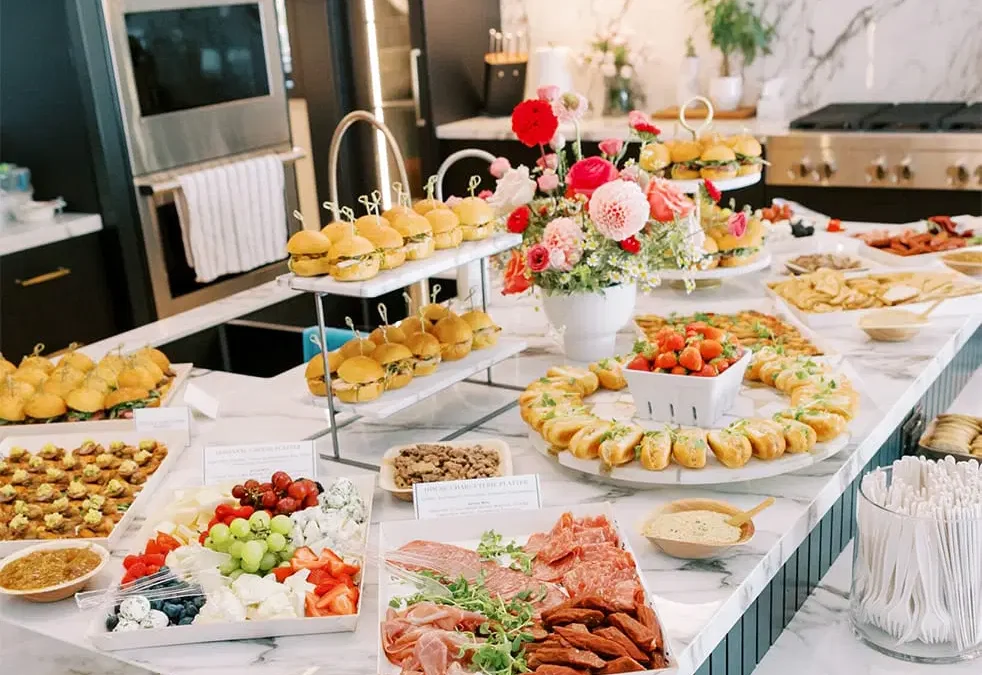
A first birthday party is really two parties happening at the same time.
There is the party for the baby, which mostly involves one decorated smash cake, a lot of photographs, and a toddler who has no idea what is happening but will enthusiastically destroy whatever is placed in front of them. And there is the party for the adults, which requires actual food, real drinks, and something more substantial than mini sandwiches to keep everyone fed through an afternoon of celebrating.
Getting the food right for both audiences is the part most first birthday planning guides underestimate. The baby’s cake gets significant attention. The guest food often gets treated as an afterthought, which leads to either too little food, the wrong kind of food, or a spread that works for adults but ignores the other small children who are almost certainly also at the party.
This guide covers first birthday party food ideas for every part of the table, from the smash cake to the finger food spread to the adult dishes, with practical guidance on quantities, simplicity, and what actually works when the guest list includes babies, toddlers, older kids, and adults all eating from the same spread.
Start With the Smash Cake: Baby’s Main Event
The smash cake is the centerpiece of the first birthday food moment and deserves its own planning separate from the main party dessert.
A smash cake is a small individual cake sized specifically for the birthday baby to dig into with their hands, usually placed in front of them for photos while the rest of the guests watch. It does not need to be elaborate. It needs to be safe, soft enough for a one-year-old to easily grab and eat, and sturdy enough to hold up for photos before the destruction begins.
What works for a smash cake
A simple vanilla or banana cake made with minimal sugar is the standard choice for most first birthday smash cakes. At one year old, most babies have not been exposed to much added sugar, and a very sweet cake can produce an overwhelming reaction that derails the moment. A lightly sweetened cake with a soft frosting lets the baby enjoy the experience without the sugar overload.
Cream cheese frosting is one of the most popular smash cake choices because it is less sweet than standard buttercream, holds up reasonably well for photos, and most babies respond well to the flavor. Whipped cream frosting is softer and easier for small hands but does not hold as long before needing refrigeration.
Avoid fondant for the smash cake. It is difficult for babies to eat, does not taste particularly good, and adds a texture that can be off-putting for a one-year-old encountering cake for the first time.
The main party cake is separate
Most first birthday parties have a smash cake for the baby and a separate full-sized cake for the guests. The guest cake can be more elaborate, more traditionally sweet, and decorated to match the party theme. These are two different items with two different purposes, and treating them that way produces better results for both.
Finger Foods for the Baby and Toddler Guests
Beyond the smash cake, the birthday baby and any toddler guests at the party need food options that are safe, age-appropriate, and easy to eat without utensils or adult assistance.
First birthday party food ideas for babies and toddlers should follow basic safety guidelines: nothing that is a choking hazard, nothing with added salt or sugar beyond what naturally occurs in the ingredient, and everything soft enough to be gummed or chewed by a child with few or no teeth.
Soft fruit
Ripe banana slices, soft melon cubes, ripe pear pieces, and halved blueberries are among the most reliable options for baby-friendly fruit at a first birthday. They require no preparation beyond cutting, hold up well on a platter for a couple of hours, and most babies and toddlers will eat them without hesitation.
Avoid grapes served whole, which are a choking hazard. Halved or quartered grapes are safe and work well on a mixed fruit platter alongside the other options.
Soft cooked vegetables
Steamed broccoli florets cut small, roasted sweet potato pieces, and soft cooked carrot rounds are all appropriate for one-year-olds and older toddlers. They can be prepared in advance, served at room temperature, and placed on the table alongside the adult food without requiring a separate setup.
Mini sandwiches cut small
Simple sandwiches on soft bread, cut into quarters or small shapes, work well for toddlers who are eating a wider range of foods. Cream cheese and cucumber, soft cheese, or a simple egg salad without added salt are all appropriate fillings for this age group.
Keep the adult sandwich options clearly separate if they contain ingredients like deli meat, mustard, or harder toppings that are not appropriate for very young children.
Puffs and age-appropriate snacks
For babies who are still primarily eating purees or very soft foods, a small bowl of baby puffs or similar age-appropriate snacks gives them something to work with independently while the older guests eat. These are also useful for keeping babies occupied during the party without requiring adult food preparation.
Kids Birthday Party Food Ideas for Older Children
If the first birthday guest list includes older siblings, cousins, or family friends in the three-to-eight age range, the food spread needs to account for their preferences as well. Older children are past the choking hazard concerns of the toddler years but are not yet fully on board with the adult menu.
Mini pizzas
Individual mini pizzas are one of the most reliable kids birthday party food ideas for any age group above two. They can be made in advance, reheated before the party, and set out in a way that feels special without requiring significant effort. Using English muffins or small naan as the base keeps them appropriately sized for small hands and eliminates the need to cut larger slices.
Keep toppings simple. Cheese and plain tomato sauce covers the broadest range of children’s preferences. Having one or two additional topping options available without making it a full topping bar keeps the setup manageable.
Macaroni and cheese
A large tray of baked macaroni and cheese works across age groups from toddlers to adults and is one of the most universally accepted party dishes at events where children are the majority of guests. Made in advance and kept warm, it requires minimal day-of effort and produces very little waste because it is consistently one of the first things to disappear from a party spread.
Fruit skewers
Fruit threaded onto small skewers or toothpicks is more appealing to older children than a standard fruit platter and requires almost no additional effort. Using melon, strawberry, grape, and pineapple in rotating combinations gives each skewer enough variety to be interesting. For toddlers, remove the skewer and serve the same fruit pieces on a plate.
Mini corn dogs or chicken bites
For parties where something hot and savory is needed beyond pizza and macaroni, mini corn dogs or baked chicken bites are consistently popular with children across the relevant age range. They can be purchased from the grocery store freezer section, baked rather than fried, and served with a simple dipping sauce that older children can manage themselves.
Adult Food Ideas for 1st Birthday Party
The adult portion of a first birthday party food spread often gets treated as whatever is left over after the kids menu is planned. It should get more deliberate attention than that, because adults are the ones who spent time, travel, and money to be at the party and deserve food that feels like it was actually chosen for them.
A grazing or charcuterie spread
A charcuterie and grazing board scales well for first birthday parties because it requires no heating, can be assembled in advance, and gives adults something to snack on throughout the afternoon rather than needing a structured sit-down meal. Cured meats, a selection of cheeses, crackers, olives, nuts, fresh fruit, and a few dips from the deli section create a spread that feels put together without requiring significant cooking.
A main dish that feeds a crowd
For parties where a more substantial meal is expected, one or two main dishes that can be set out buffet style and eaten without significant utensil management work best. A slow-cooked pulled chicken or pulled pork that guests can serve themselves into rolls, a baked pasta dish, or a rice-based dish with a protein component all work well in this format. They can be made or purchased a day in advance and reheated, which removes the day-of cooking burden.
A simple salad
One large green salad or grain salad served alongside the main dish rounds out the adult spread without significant preparation. A salad that holds up well without wilting, such as a kale salad, a grain salad, or a classic pasta salad, is more practical for a party format than a delicate lettuce-based salad that needs to be dressed at the last minute.
Dips and lighter options
Hummus with pita, guacamole with chips, and a simple vegetable dip with crudites give adults lighter snacking options that balance the heavier main dishes and complement the grazing spread. These also cover guests with dietary restrictions without requiring separate preparation.
Drinks for Every Guest
First birthday party drinks need to cover the full range of guests from babies through adults.
For babies and young toddlers, water in their own cups is the appropriate choice. Juice, even diluted, is more sugar than most pediatric guidelines recommend for this age group at a party setting.
For older children, a simple juice box selection or a non-alcoholic fruit punch gives them a drink that feels festive without being soda. A self-serve lemonade or fruit-infused water station works well for children old enough to pour their own drinks.
For adults, a simple beverage station with sparkling water, a non-alcoholic option like a fruit punch or mocktail, and whatever alcoholic beverages suit the hosting household covers the full range without requiring a full bar setup.
How Much Food to Plan For
Quantity planning for a first birthday is easier with a few simple guidelines based on guest count and party format.
For a party of twenty guests across all ages, a grazing spread sized for twenty, one main dish that serves sixteen to twenty, one or two kids-specific dishes that together serve eight to ten portions, and a dessert spread that includes the smash cake plus a guest cake sized for eighteen to twenty servings covers the realistic consumption range without significant over-purchasing.
For a smaller party of ten to twelve, scale the main dish down to twelve servings, keep one kids-specific dish rather than two, and size the guest cake for twelve. The grazing spread can be smaller but should still offer enough variety to cover two to three hours of snacking.
The general principle for first birthday food quantities is to plan for slightly less than you think you need for the kids menu, because children at party settings eat less than expected, and slightly more than you think for the adult menu, because adults at afternoon events tend to graze more continuously than at a seated dinner.
A Simple First Birthday Party Food Timeline
Day before the party: prepare the smash cake and the guest cake if making from scratch, or pick them up from the bakery. Make any dishes that benefit from overnight rest, such as pasta salad, pulled protein, or baked pasta. Assemble the charcuterie components and refrigerate separately for assembly the next day.
Morning of the party: assemble the grazing board and refrigerate covered. Prep any raw produce for the kids and adult spreads. Bake or reheat any hot items that need to be ready at party start time.
One hour before guests arrive: pull the grazing board from the refrigerator to come slightly toward room temperature. Set up the food stations. Reheat any hot dishes.
As guests arrive: set out the grazing spread and drinks station. Hold the smash cake until the designated birthday moment.
Find Everything You Need at Key Food Lauderhill
Every ingredient for this first birthday spread, from the smash cake basics to the charcuterie components, fresh produce, party snacks, and beverages, is available at Key Food Lauderhill. The deli counter, bakery, and prepared foods section make it possible to build a complete first birthday party food spread in a single shopping trip without the stress of sourcing from multiple stores.
Come in and let the store do the work so you can focus on the party.
FAQs
What food should I serve at a first birthday party?
A first birthday party food spread should cover three groups: baby-safe finger foods and a smash cake for the birthday child and toddler guests, simple kid-friendly options like mini pizzas and macaroni and cheese for older children, and a grazing spread plus one or two main dishes for adults. Planning for all three groups separately produces a better spread than trying to find one food that works for everyone.
What is a smash cake for a first birthday?
A smash cake is a small individual cake placed in front of the birthday baby for them to dig into with their hands, usually for photos. It is separate from the main party cake served to guests and should be lightly sweetened, soft enough for a one-year-old to eat safely, and free of choking hazards like fondant decorations.
What finger foods are safe for a one-year-old at a birthday party?
Safe finger foods for one-year-olds include soft ripe fruit like banana and melon, soft cooked vegetables like sweet potato and broccoli, and small pieces of soft bread with simple spreads. Avoid choking hazards including whole grapes, hard raw vegetables, and anything with a firm or crunchy texture a baby cannot safely gum or chew.
How much food do I need for a first birthday party of twenty guests?
For twenty guests across all ages, plan for a grazing spread sized for twenty, one main dish serving sixteen to twenty, one to two kids dishes together serving eight to ten portions, and a guest cake sized for eighteen to twenty servings. Children at party settings typically eat less than expected, so scale the kids menu accordingly.
What are easy food ideas for a first birthday party?
The easiest first birthday party food ideas combine store-bought and minimal-prep items: a deli charcuterie spread, store-bought or bakery-made cakes, baked mini pizzas, a prepared macaroni and cheese, fruit platters, and a simple main dish made or purchased the day before. This approach minimizes day-of cooking while still producing a complete and appealing spread.
Can I get first birthday party food from a supermarket?
Yes. A well-stocked supermarket covers every component of a first birthday food spread, including bakery cakes, deli platters, prepared main dishes, fresh produce for fruit and vegetable platters, and packaged kids snacks. Shopping from one store rather than multiple specialty sources simplifies the logistics and often reduces total cost.